Why one weight is not enough
Without the previous date and weight, growth is hard to assess. Loose sheets require manual matching, and a wrong animal number undermines the comparison. Useful history starts with correct identification and consistent recording in one animal record.
The weighing workflow
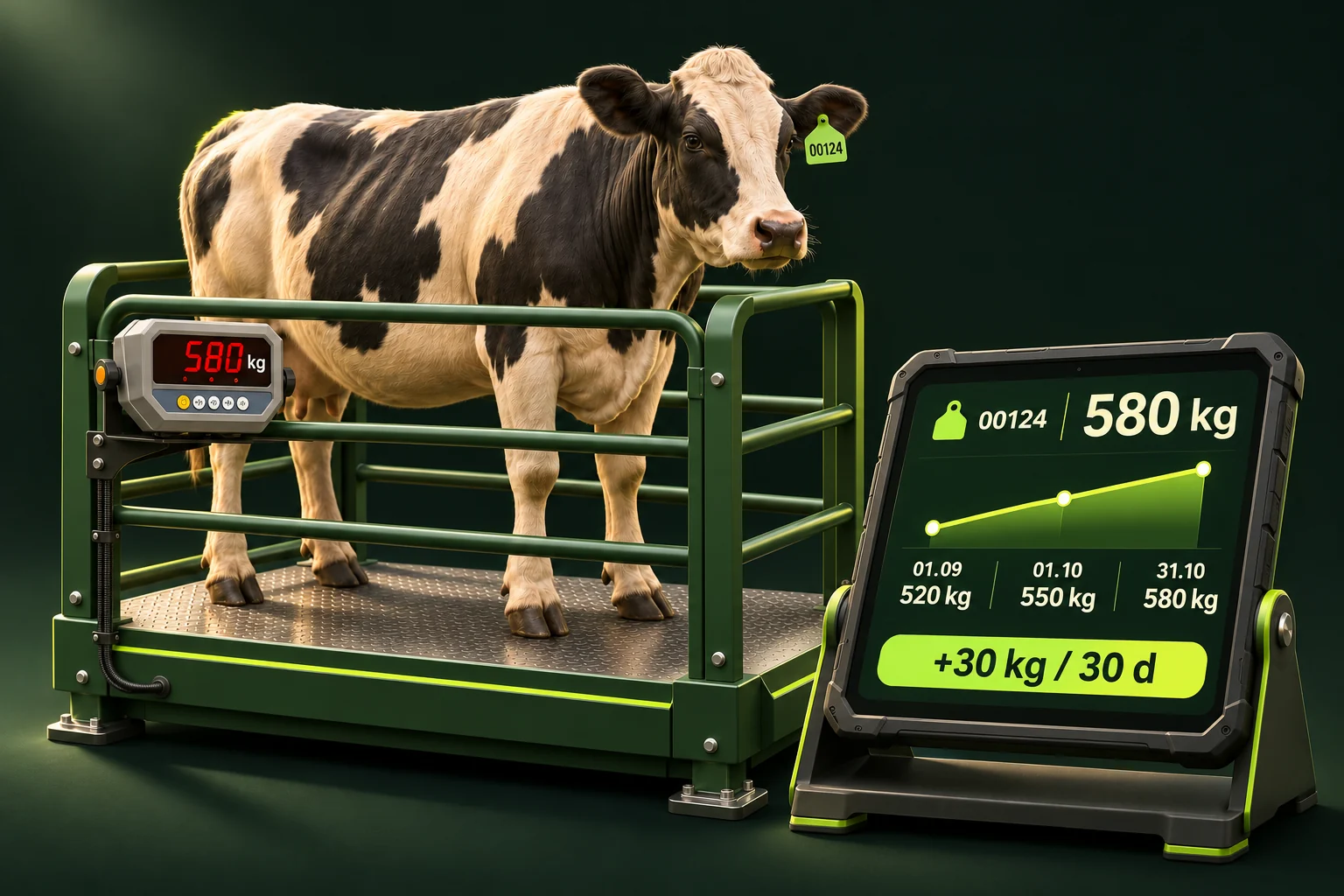
Scan RFID or look up the animal by number, check the record and connected scale reading, then save. The tablet keeps the measurement and transfers it during a successful sync. The indicator and its protocol are checked during setup; universal compatibility is not assumed.
Reading the trend
The dashboard provides measurement history, a chart and weight gain between records. Always compare dates too: the same gain over a week or a month means different growth rates. Consider measurement conditions as well. A chart highlights a change but does not diagnose its cause or replace specialist judgement.
Corrections and export
Correct an erroneous weight with a reason while retaining the original value in history. Filter the log and export the selection to CSV for further calculations. Resending a confirmed tablet record does not create another weighing, keeping the history consistent.
Illustrative workflow
Putting it into practice
Illustrative example: 396 kg on 1 October and 428 kg on 31 October means a 32 kg gain over 30 days. The specialist reviews both records alongside husbandry conditions. These figures explain a calculation, not a promised growth result.
Questions and answers
Does it diagnose poor growth?
No. It supplies weight history for analysis. A specialist determines the cause using the wider context.
Can records be used in Excel?
Export the selected weighing records as CSV. Special report layouts and accounting integrations are agreed separately.